




Available 24/7: 810-678-6884
28345 Beck Rd., 203, Wixom, MI 48493
OUTPATIENT ADDICTION TREATMENT IN MICHIGAN

IOP in Ann Arbor, Michigan

Peer Support During Addiction Treatment
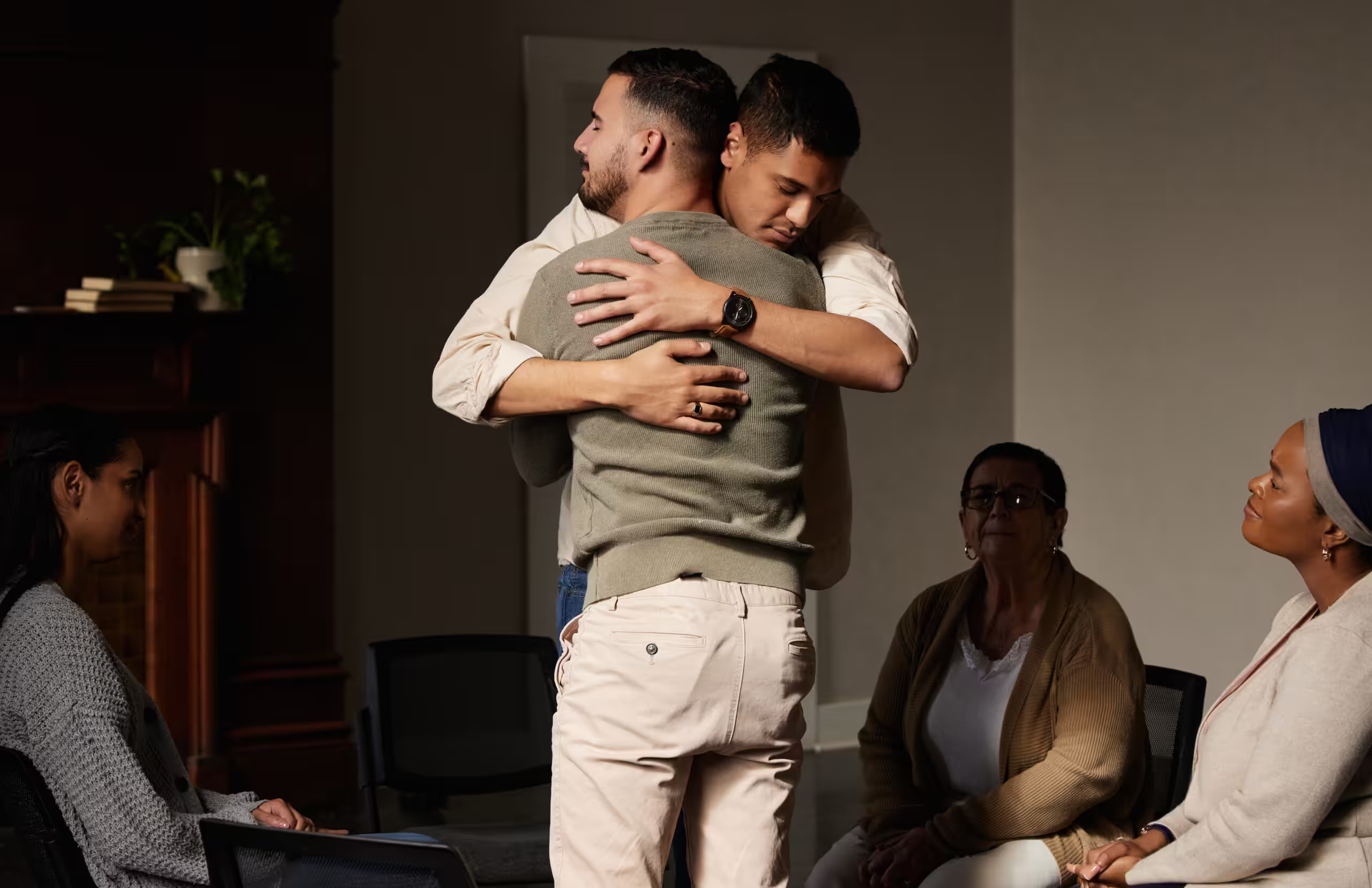
People support each other in a rehab session
Break Free Today

IOP in Ann Arbor, MI

Ann Arbor occupies a distinctive position in Michigan’s behavioral health landscape. It is a city of considerable resources—home to the University of Michigan and its nationally recognized health system, a robust nonprofit sector, and a population that is, on average, highly educated and economically stable. And yet, for all of that, Ann Arbor and the broader Washtenaw County community are not insulated from the realities of addiction and substance use disorder.

Finding the courage to ask for help when struggling with addiction can feel overwhelming. At Liberty House Outpatient in Ann Arbor, MI, we are committed to giving you the tools and support to create a path forward—one that prioritizes both your healing and your ability to remain connected to your life and responsibilities.

Our Intensive Outpatient Program (IOP) is designed for individuals who need structured treatment without stepping away entirely from their daily obligations. Whether it’s work, school, family, or community commitments, our program lets you pursue recovery in a way that fits the life you’ve built. With evidence-based approaches and personalized care, we serve individuals in Ann Arbor, MI, and its surrounding areas, ensuring you’re supported every step of the way toward lasting change.

Treatment Services
Partial Hospitalization Program
Treatment Services
Intensive Outpatient Program
Treatment Services
Outpatient Program
Understanding Michigan IOP

What Is an Intensive Outpatient Program in Ann Arbor, MI?

An Intensive Outpatient Program (IOP) is a treatment option designed to address addiction and co-occurring mental health conditions while allowing patients to live at home and maintain much of their daily routine. Unlike residential care, IOP does not require a 24-hour commitment, but it still provides a highly structured, effective therapeutic model for individuals who need support.

In our Ann Arbor IOP, you will attend therapy sessions several times a week—usually three to five—with each session lasting two to four hours. These sessions include individual counseling, group therapy, skills workshops, and family education, all tailored to your specific needs. This balance of flexibility and structure makes IOP an excellent option for people who want to heal while staying engaged in their personal and professional lives.

Who Can Benefit from IOP in Ann Arbor, MI

The IOP at Liberty House Outpatient is designed for individuals who need more support than traditional outpatient therapy offers but who also may not require the round-the-clock care of inpatient treatment. This program is the right fit if:

  • You’ve recently completed inpatient or detox treatment and need ongoing care to sustain your progress.
  • You’re looking for a recovery program that works around your commitments, such as work, school, or caregiving.
  • You require a structured, intensive recovery program to address both addiction and co-occurring mental health challenges such as anxiety, depression, or trauma.
  • You want to remain connected to your local community while undergoing treatment.

Ultimately, our Ann Arbor IOP makes recovery accessible while maintaining the flexibility that allows individuals to stay actively involved in their lives.

Get the Help You Need, When You Need It.

What to Expect

What to Expect During IOP in Ann Arbor, MI

The IOP in Ann Arbor, MI begins with a thorough intake assessment to understand your specific needs, challenges, and goals. This information helps create a personalized treatment plan designed just for you.

Key components of the program include:

  • Individual Counseling: One-on-one sessions with licensed therapists give you the opportunity to explore the root causes of addiction, tackle unhealthy thought patterns, and develop personalized strategies for long-term recovery.
  • Group Therapy: Group settings foster connection, accountability, and encouragement by bringing you together with others who understand your experiences. Sharing perspectives and learning from peers often helps reduce feelings of isolation while strengthening motivation.
  • Family Counseling: Addiction impacts families, and relationships are an important part of healing. Family participation in therapy can help restore trust, build stronger communication, and equip loved ones with tools to support recovery.
  • Relapse Prevention: Workshops focus on strengthening practical coping skills, helping individuals navigate real-world triggers, and avoiding high-risk situations that could interrupt progress.
  • Life Skills Training: Beyond therapy, recovery requires building daily habits that promote health. Sessions on stress management, communication, goal-setting, and mindfulness ensure you have the tools to succeed in every aspect of life.
  • Aftercare Planning: At the conclusion of the program, our team works with you to create an individualized plan for ongoing care. This may include outpatient therapy, support groups, or other local resources tailored to your long-term needs.

The Importance of Structured Care

Why the Right Level of Care Makes a Measurable Difference

When exploring options for addiction treatment, selecting the right level of care is one of the most significant and often underestimated decisions you can make. This decision can have a profound impact on your recovery journey, as the amount of support and structure you receive needs to align with the challenges you’re facing.

Standard outpatient therapy typically involves one to three hours of professional support per week. While this level of care may be appropriate for those who are further along in their recovery or managing less severe challenges, it is often not enough for individuals who are in the early stages of recovery or who require more intensive support. By contrast, intensive outpatient programs (IOPs) offer a more robust structure, involving several hours of therapy, education, and skill-building sessions each week. For many, this increased level of engagement, accountability, and guidance is an essential component to successfully navigating early recovery—a time when the risk of relapse tends to be greatest.

For those in Ann Arbor who have already tried less intensive treatment and found it wasn’t enough to achieve lasting results—or for those entering treatment who recognize that occasional weekly therapy sessions aren’t sufficient for their needs—our IOP offers a comprehensive solution. It provides the support, structure, and tools needed to build a strong foundation for long-term recovery.

One of the most common and avoidable barriers to successful treatment is a mismatch between the level of clinical care required and the treatment being provided. If care is not intensive enough, it can leave individuals feeling as though recovery isn’t possible, reinforcing an unhealthy cycle of attempts and setbacks. A thorough and honest assessment is critical at the outset. This process ensures your treatment is matched to your specific needs, minimizing the risk of missteps and giving you the best chance at breaking the cycle for good.

By choosing the appropriate level of care, such as an intensive outpatient program in Ann Arbor, you give yourself or your loved one the greatest chance to develop the skills and resilience necessary for lifelong recovery.

Listen, therapy and a military man with a psychologist for counselling, support and psychology. Young army, veteran or soldier person on therapist couch for mental health, consultation or help.
The Impact of Substance Abuse in Michigan

Substance Use and Behavioral Health in Ann Arbor and Washtenaw County

Ann Arbor’s reputation as a progressive, resource-rich community can obscure a straightforward reality: addiction does not exclude people based on education, income, or zip code. Washtenaw County has experienced measurable and ongoing harm from opioid misuse and other substance use challenges that affect communities across the county’s full economic and demographic range.

According to the Michigan Department of Health and Human Services (MDHHS), opioids—particularly illicit fentanyl—remain the leading cause of overdose deaths across Michigan, and Washtenaw County communities have not been exempt from that trend despite the presence of major health systems and academic institutions. Alcohol use disorder remains one of the most prevalent substance use conditions in Michigan’s treatment-seeking population, and stimulant-related treatment admissions have increased substantially statewide in recent years.

Two dimensions of this picture are particularly relevant to Ann Arbor. First, the University of Michigan community creates a specific and well-documented risk environment around alcohol and substance use among young adults—and students or recent graduates navigating early recovery in an active college environment face challenges that require clinically sophisticated, individualized support. Second, high-functioning professionals managing addiction—who may present as outwardly successful while privately struggling—often delay seeking help longer than necessary, partly because intensive treatment feels incompatible with professional identity and responsibility.

Can you continue work during outpatient rehab
Public Resources for The Community

Local Resources for Ann Arbor Residents and Families

Washtenaw County Community Mental Health (WCCMH): Behavioral health and substance use services for Washtenaw County residents, including those in Ann Arbor, Ypsilanti, Saline, Chelsea, Dexter, and surrounding communities. WCCMH coordinates access to publicly funded treatment and crisis services.

Common Ground Crisis Center: 24-hour crisis intervention, mental health support, and community referrals serving the greater Metro Detroit and southeastern Michigan region, accessible to Ann Arbor-area residents.

Michigan 211: Statewide resource directory connecting residents to behavioral health, housing, transportation, and community services throughout Washtenaw County and surrounding areas.

Ann Arbor Area Transportation Authority (TheRide): Public transit service connecting Ann Arbor, Ypsilanti, and surrounding Washtenaw County communities—providing transportation options relevant to outpatient treatment access for residents without personal vehicles or those preferring not to drive daily.

University of Michigan Counseling and Psychological Services (CAPS): Mental health and substance use counseling services for University of Michigan students. CAPS provides individual counseling, crisis support, and referrals to community-based treatment when appropriate.

Dawn Farm: A Washtenaw County-based addiction treatment and recovery support organization with deep roots in the Ann Arbor and Ypsilanti community. Dawn Farm provides residential treatment, sober housing, outpatient services, and peer recovery support.

SMART Recovery Michigan: Evidence-based, peer-led recovery support meetings available in-person and online throughout Michigan, with options accessible to Ann Arbor, Ypsilanti, Saline, Chelsea, Dexter, and surrounding communities.

Alcoholics Anonymous – Ann Arbor Area: Local AA meeting schedules and peer support resources for Ann Arbor and Washtenaw County communities.

Narcotics Anonymous – Michigan Region
NA meeting information and peer support resources throughout southeastern Michigan, including Washtenaw County communities.

University of Michigan Health – Department of Psychiatry: Comprehensive psychiatric and behavioral health services available to Ann Arbor-area residents, including evaluation and medication management for co-occurring mental health conditions relevant to individuals in addiction recovery.

VERIFY YOUR INSURANCE BENEFITS

We Work With Most Major Insurance

Signs of Drug Addiction and How to Get Help
Break Free Today

Begin Your Recovery With IOP in Ann Arbor, MI

If you’re searching for an effective and compassionate treatment program that respects your time and commitments, Liberty House Outpatient’s IOP in Ann Arbor, MI is here to meet your needs. Recovery is challenging, but with the right support, you can heal and move forward with confidence.

Contact us today to learn more about how our program works and how we can help you build a life free from addiction. Let us guide you through the next steps—you don’t have to face this alone.