




Available 24/7: 810-678-6884
28345 Beck Rd., 203, Wixom, MI 48493
OUTPATIENT ADDICTION TREATMENT IN MICHIGAN

PHP in Ann Arbor, Michigan

Peer Support During Addiction Treatment
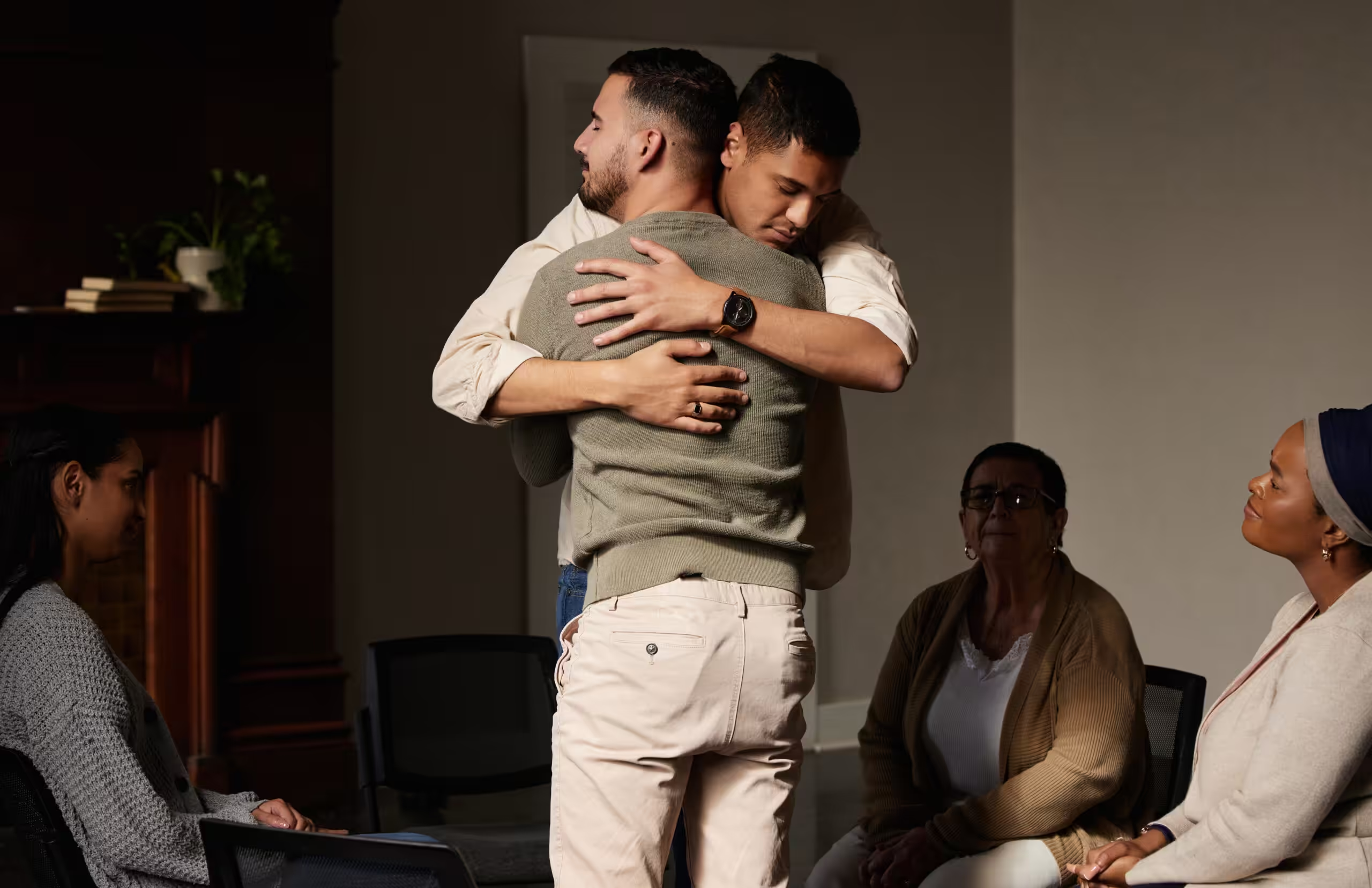
People support each other in a rehab session
Break Free Today

PHP in Ann Arbor, MI

Ann Arbor occupies a distinctive position in Michigan’s behavioral health landscape. It is a city of considerable resources—home to the University of Michigan and its nationally recognized health system, a robust nonprofit sector, and a population that is, on average, highly educated and economically stable. And yet, for all of that, Ann Arbor and the broader Washtenaw County community are not insulated from the realities of addiction and substance use disorder. Opioid misuse, alcohol use disorder, and co-occurring mental health challenges affect people here across every demographic—in university communities, in long-established neighborhoods, in families that never expected to be searching for addiction treatment in Ann Arbor, Michigan.

If you are searching for a Partial Hospitalization Program in Ann Arbor, Michigan, Liberty House Outpatient in Wixom is one of the most accessible and clinically experienced PHP providers within commuting distance. The drive from Ann Arbor to Wixom via I-94 east to I-275 north typically runs between thirty and forty-five minutes depending on traffic—a commute that places more than 30 years of combined outpatient addiction treatment experience in Michigan within practical, daily reach. For Ann Arbor residents who need the clinical intensity of PHP but want to remain at home, engaged in their lives and relationships while they recover, that proximity to serious, individualized care matters considerably.

Treatment Services
Partial Hospitalization Program
Treatment Services
Intensive Outpatient Program
Treatment Services
Outpatient Program
Understanding Michigan PHP

What Is a Partial Hospitalization Program in Ann Arbor, MI?

If you are weighing your options and trying to understand what PHP actually means before making any decisions, this is the right place to begin. Clarity here is more useful than anything else.

A Partial Hospitalization Program is the most intensive level of outpatient addiction treatment available. It delivers the clinical structure and therapeutic depth typically associated with inpatient or residential care—multiple hours of structured programming each day, individualized treatment planning, and direct access to licensed behavioral health professionals—without requiring an overnight stay or a step away from home. Clients attend structured daytime programming, typically five days per week, and return home each evening.

The clinical foundation for this model is well-established: frequent, consistent professional engagement during early or high-risk stages of recovery produces meaningfully better outcomes than less intensive approaches for individuals whose clinical needs exceed what standard outpatient therapy can reliably address. PHP delivers that level of engagement while keeping clients embedded in their actual lives—their families, their community, the environment they are actively learning to navigate in recovery.

For Ann Arbor residents—many of whom are managing demanding professional roles, academic responsibilities, or caregiving commitments alongside a substance use challenge—the ability to engage in genuinely intensive treatment without a residential placement is often what makes serious help feel like a realistic choice rather than an impossible one.

A PHP near Ann Arbor may be the right level of care if you or someone you care about:

  • Has recently completed medical detox or inpatient treatment and needs continued clinical structure during the transition back to everyday life
  • Is managing a significant substance use challenge while living in a stable, supportive home environment
  • Has tried standard outpatient therapy without achieving consistent or lasting progress
  • Is navigating co-occurring mental health conditions—such as anxiety, depression, or trauma—alongside substance use
  • Recognizes that the accountability and frequency of weekly sessions will not match what their recovery genuinely requires right now

The right level of care is always determined through a proper clinical assessment—not a program description. If you are uncertain whether PHP is the right fit for your situation, the team at Liberty House Outpatient will work through that question with you directly, honestly, and without any pressure to commit before you feel ready.

Get the Help You Need, When You Need It.

What to Expect

What PHP in in Ann Arbor, MI at Liberty House Outpatient Involves

Starting a Partial Hospitalization Program is a significant decision, and knowing how that time will be spent can help individuals and families determine whether the level of care feels appropriate. At Liberty House Outpatient, PHP is designed to provide consistent therapeutic involvement throughout the week while giving clients opportunities to work on the personal, emotional, and behavioral challenges that can make recovery difficult. The experience is structured, but the direction of treatment is shaped by the needs of each individual.

Building a Treatment Plan Around the Individual

Before regular programming begins, the clinical team develops a detailed understanding of what has brought the client to treatment. The assessment process considers patterns of alcohol or drug use as well as physical health, emotional well-being, relationships, responsibilities at home, previous attempts at recovery, existing support systems, and concerns that could interfere with progress.

This information becomes the starting point for care. Rather than moving every client through an identical set of goals, clinicians identify the areas that deserve the greatest attention and establish priorities for treatment. Those priorities can change over time as new challenges emerge or the client becomes more stable.

Understanding the Patterns Behind Substance Use

A major focus of PHP is helping clients recognize what happens before, during, and after substance use. In individual therapy, clients have private time with a clinician to explore experiences that may be influencing their behavior. This could include stress, relationships, difficult emotions, trauma, self-esteem, unhealthy coping mechanisms, or patterns that have become deeply ingrained over time.

Therapy also looks forward. Clients work on identifying alternative ways to respond to situations that previously led to substance use, with an emphasis on developing strategies that make sense within their actual lives.

Practicing Recovery With Other People

Recovery involves more than understanding personal triggers. It also requires learning how to navigate relationships, conflict, responsibilities, emotions, and stressful situations differently. Group therapy gives clients a setting where they can work on these areas while interacting with others who are also making meaningful changes in their lives.

Depending on clinical needs, groups may explore relapse warning signs, coping with cravings, boundaries, communication, emotional regulation, stress management, decision-making, and rebuilding healthy routines. The peer environment also gives clients opportunities to listen, contribute, receive feedback, and become more comfortable asking for support.

Turning Knowledge Into Practical Skills

PHP also helps clients better understand why certain behaviors and reactions occur. Recovery education and psychoeducation can examine how substance use affects the brain and behavior, why cravings develop, how triggers become associated with substance use, and why certain situations can increase vulnerability to relapse.

The purpose is not simply to provide information. Clients are encouraged to connect what they learn to their own experiences so they can recognize patterns earlier and make more deliberate choices when challenges arise outside of treatment.

Looking at Mental Health Alongside Addiction

For some clients, substance use is only one part of a larger behavioral health picture. Symptoms of depression, anxiety, trauma, chronic stress, or other emotional difficulties may influence why substances are used and what makes stopping difficult.

When these concerns are identified and clinically appropriate to address within the program, they can become part of the treatment plan. This broader perspective helps clinicians understand the relationship between emotional health and substance use instead of approaching recovery as though the two exist independently.

Preparing for Life With Less Structure

PHP is ultimately intended to help clients become more capable of managing recovery outside of intensive programming. Throughout treatment, the clinical team can evaluate progress, identify areas that still require attention, and begin preparing clients for greater independence.

As stability develops, treatment may increasingly focus on maintaining healthy routines, strengthening support systems, managing responsibilities, recognizing early warning signs, and planning for the next stage of care. For clients who are ready, this may eventually mean transitioning into Intensive Outpatient (IOP) or traditional Outpatient (OP) treatment.

At Liberty House Outpatient, the goal is not simply to complete a set number of sessions. PHP provides a concentrated period of clinical support where clients can better understand themselves, practice different ways of responding to challenges, and build a stronger foundation for the stages of recovery that follow.


The Importance of Structured Care

Why the Right Level of Care Makes a Measurable Difference

This is worth addressing directly, because it is one of the most consequential and most frequently underestimated decisions in addiction treatment.

Standard outpatient therapy typically provides one to three hours of professional contact per week. That level of engagement is genuinely appropriate for some clinical situations—and genuinely insufficient for others. PHP provides multiple hours of structured group and individual programming each day—significantly more clinical engagement, more consistent skill development, and a level of daily accountability that many individuals find essential during early recovery when the risk of relapse is at its highest.

For Ann Arbor residents who have engaged with less intensive treatment without achieving lasting stability—or who are beginning recovery and already recognize that weekly sessions will not match what their situation requires—PHP offers the clinical foundation that durable recovery genuinely depends on. A persistent mismatch between clinical need and treatment intensity is one of the most common and most preventable obstacles in addiction care. A thorough, honest assessment identifies that mismatch before it becomes a repeating pattern across multiple treatment attempts.

Listen, therapy and a military man with a psychologist for counselling, support and psychology. Young army, veteran or soldier person on therapist couch for mental health, consultation or help.
The Impact of Substance Abuse in Michigan

Substance Use and Behavioral Health in Ann Arbor and Washtenaw County

Ann Arbor’s reputation as a progressive, resource-rich community can obscure a straightforward reality: addiction does not exclude people based on education, income, or zip code. Washtenaw County has experienced measurable and ongoing harm from opioid misuse and other substance use challenges that affect communities across the county’s full economic and demographic range.

According to the Michigan Department of Health and Human Services (MDHHS), opioids—particularly illicit fentanyl—remain the leading cause of overdose deaths across Michigan, and Washtenaw County communities have not been exempt from that trend despite the presence of major health systems and academic institutions. Alcohol use disorder remains one of the most prevalent substance use conditions in Michigan’s treatment-seeking population, and stimulant-related treatment admissions have increased substantially statewide in recent years.

Two dimensions of this picture are particularly relevant to Ann Arbor. First, the University of Michigan community creates a specific and well-documented risk environment around alcohol and substance use among young adults—and students or recent graduates navigating early recovery in an active college environment face challenges that require clinically sophisticated, individualized support. Second, high-functioning professionals managing addiction—who may present as outwardly successful while privately struggling—often delay seeking help longer than necessary, partly because intensive treatment feels incompatible with professional identity and responsibility. PHP’s structure is specifically suited to both of these realities: it provides genuine clinical intensity while allowing clients to remain at home, engaged in their lives and relationships throughout the treatment process.

Can you continue work during outpatient rehab
Public Resources for The Community

Local Resources for Ann Arbor Residents and Families

Washtenaw County Community Mental Health (WCCMH): Behavioral health and substance use services for Washtenaw County residents, including those in Ann Arbor, Ypsilanti, Saline, Chelsea, Dexter, and surrounding communities. WCCMH coordinates access to publicly funded treatment and crisis services.

Common Ground Crisis Center: 24-hour crisis intervention, mental health support, and community referrals serving the greater Metro Detroit and southeastern Michigan region, accessible to Ann Arbor-area residents.

Michigan 211: Statewide resource directory connecting residents to behavioral health, housing, transportation, and community services throughout Washtenaw County and surrounding areas.

Ann Arbor Area Transportation Authority (TheRide): Public transit service connecting Ann Arbor, Ypsilanti, and surrounding Washtenaw County communities—providing transportation options relevant to outpatient treatment access for residents without personal vehicles or those preferring not to drive daily.

University of Michigan Counseling and Psychological Services (CAPS): Mental health and substance use counseling services for University of Michigan students. CAPS provides individual counseling, crisis support, and referrals to community-based treatment when appropriate.

Dawn Farm: A Washtenaw County-based addiction treatment and recovery support organization with deep roots in the Ann Arbor and Ypsilanti community. Dawn Farm provides residential treatment, sober housing, outpatient services, and peer recovery support.

SMART Recovery Michigan: Evidence-based, peer-led recovery support meetings available in-person and online throughout Michigan, with options accessible to Ann Arbor, Ypsilanti, Saline, Chelsea, Dexter, and surrounding communities.

Alcoholics Anonymous – Ann Arbor Area: Local AA meeting schedules and peer support resources for Ann Arbor and Washtenaw County communities.

Narcotics Anonymous – Michigan Region
NA meeting information and peer support resources throughout southeastern Michigan, including Washtenaw County communities.

University of Michigan Health – Department of Psychiatry: Comprehensive psychiatric and behavioral health services available to Ann Arbor-area residents, including evaluation and medication management for co-occurring mental health conditions relevant to individuals in addiction recovery.

VERIFY YOUR INSURANCE BENEFITS

We Work With Most Major Insurance

Answering Your Common Questions

Frequently Asked Questions (FAQs)

Is there a Partial Hospitalization Program accessible from Bloomfield Hills, MI?

Yes. Liberty House Outpatient in Wixom provides PHP services accessible to Ann Arbor residents via I-94 east to I-275 north—a commute that typically runs between thirty and forty-five minutes. For individuals in Ann Arbor and surrounding Washtenaw County communities, Liberty House Outpatient is among the more geographically accessible PHP providers in the region, particularly for those seeking specialized outpatient care outside of the University of Michigan health system.

What makes PHP different from standard outpatient therapy?

Standard outpatient therapy typically provides one to three hours of professional contact per week. PHP provides multiple hours of structured group and individual programming each day—significantly more clinical engagement, more consistent skill development, and greater daily accountability. These represent meaningfully different levels of clinical support designed for different clinical needs. The right choice depends on a thorough individual assessment rather than general preference or what is most conveniently located.

Can I live in Ann Arbor and attend PHP while staying at home?

Yes. PHP at Liberty House Outpatient is specifically designed for clients who live at home and commute to structured daytime programming. Ann Arbor’s direct access to I-94 makes the commute to Wixom straightforward for most residents, and returning home each evening is a built-in and clinically intentional feature of the PHP model—not a limitation of outpatient care.

Does PHP at Liberty House Outpatient address co-occurring mental health conditions?

When clinically indicated, yes. The relationship between substance use and co-occurring conditions such as depression, anxiety, and trauma is well-established and clinically significant. Integrated treatment addressing both simultaneously tends to produce more durable outcomes than treating either in isolation. Co-occurring concerns are assessed at intake and incorporated into individualized treatment planning where appropriate.

What level of care follows PHP in the Liberty House Outpatient continuum?

Most clients transition from PHP to Intensive Outpatient (IOP)—continuing regular group and individual therapy with greater scheduling flexibility as recovery stabilizes and daily functioning improves. From there, clients typically progress to standard outpatient programming. Because the full continuum is available at Liberty House Outpatient, each transition happens within an established therapeutic relationship rather than requiring a fresh start with a new clinical team.


Does Liberty House Outpatient accept insurance for addiction treatment near Ann Arbor?

Yes. Liberty House Outpatient works with many major insurance providers and verifies benefits before treatment begins. Our team provides clear, accurate information about your specific coverage so that financial uncertainty does not stand between you and the level of care your situation genuinely requires.


Signs of Drug Addiction and How to Get Help
Break Free Today

Begin Your Recovery With PHP in Ann Arbor, MI

If you are in Ann Arbor or anywhere in Washtenaw County—or if you are a family member trying to understand what the right next step looks like for someone you care about—the clinical team at Liberty House Outpatient is ready to help you work through that clearly, honestly, and without pressure.

You do not need a referral to reach out. You do not need every question answered before you make the call. Recovery begins with a single conversation, and with Liberty House Outpatient accessible from Ann Arbor via a direct and manageable commute on I-94 and I-275, the level of care that genuinely matches your clinical needs is closer than it may feel right now.

Contact Liberty House Outpatient today to speak with our clinical team or verify your insurance benefits.