Ypsilanti occupies a distinctive place in southeastern Michigan—a city with deep roots in manufacturing, higher education, and community activism, situated just east of Ann Arbor along the I-94 corridor in Washtenaw County. It is a city of real character and real complexity, home to Eastern Michigan University, long-established neighborhoods, and a population that reflects the full economic and social diversity of the region. It is also a community that has experienced the impact of substance use and addiction in ways that are consistent with broader patterns across Michigan—affecting individuals across generations, income levels, and backgrounds, often with less access to specialized behavioral health care than the more affluent communities nearby.
If you’re navigating the challenges of addiction, it can be difficult to see a clear path forward—and balancing treatment with the responsibilities of daily life can feel even more overwhelming. Whether it’s work, family, or simply staying connected to your community, stepping away for inpatient care may not be realistic for you.
At Liberty House Outpatient, we understand these concerns deeply. That’s why our Intensive Outpatient Program (IOP) in Ypsilanti, Michigan, is designed to help people heal and build a foundation for long-term recovery, all while maintaining their daily commitments and routines. Our program offers structured, evidence-based care aimed at addressing the root causes of addiction and empowering individuals with the tools to overcome and thrive.
An Intensive Outpatient Program (IOP) is a treatment model that combines structure and flexibility. It provides essential support several times per week—typically 3–5 sessions lasting 2–4 hours—while allowing participants to remain at home and continue their daily responsibilities.
In our Ypsilanti IOP, participants receive comprehensive care through individual therapy, group counseling, skills-building workshops, and family support. This holistic approach ensures that recovery doesn’t just address addiction—it builds the foundation for a healthier, more fulfilling life beyond it.
Our IOP in Ypsilanti is perfect for people who:
If you’re looking for a program that balances effective treatment with real-life flexibility, IOP may be an excellent fit for your needs.
At Liberty House Outpatient, we specialize in treating a variety of substance use disorders, including:
We understand that addiction impacts every person differently, which is why our treatments are tailored to meet individual needs.
For many people, addiction doesn’t exist in isolation—it’s often connected to mental health conditions like depression, anxiety, or trauma. This combination is called a dual diagnosis, and treating both challenges simultaneously is essential for long-term success.
Our Ypsilanti IOP offers integrated care to address both addiction and mental health through evidence-based therapies like Cognitive Behavioral Therapy (CBT) and Dialectical Behavior Therapy (DBT). By treating the whole person, we help participants gain the tools to navigate difficult emotions, triggers, and stressors in a healthy way.
We know that every individual’s journey is unique, which is why our program begins with a comprehensive assessment. This allows us to design a customized treatment plan that meets your specific needs, addressing both the immediate challenges of recovery and your long-term goals.
Individual Therapy:
Private sessions with licensed therapists provide the opportunity to explore the underlying causes of addiction, develop coping strategies, and set meaningful goals.
Group Therapy:
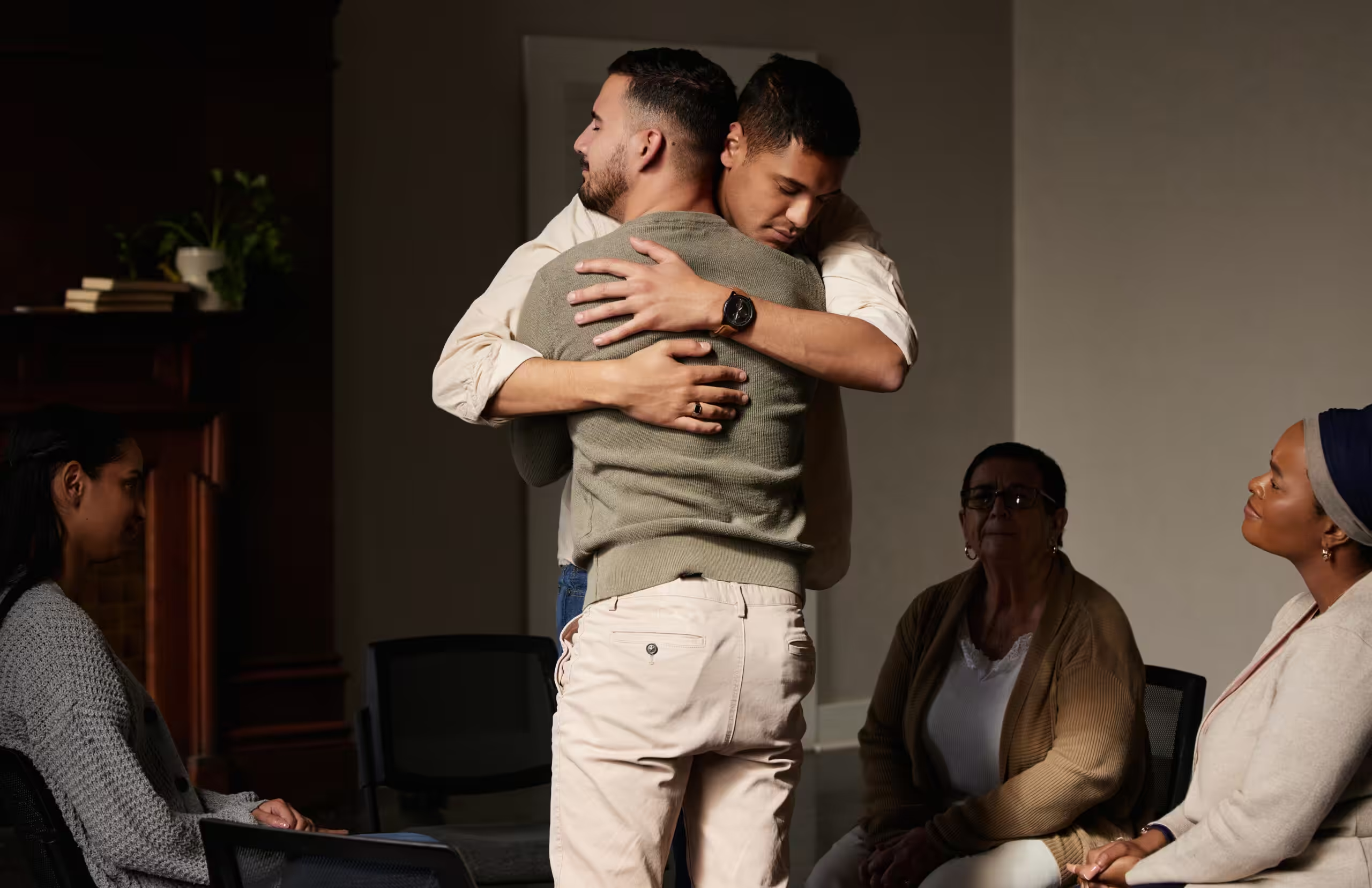
In a safe and supportive environment, group therapy fosters connection, accountability, and mutual encouragement among participants who share similar experiences.
Family Counseling:
Addiction impacts families as much as individuals. Family therapy focuses on healing relationships, rebuilding trust, and ensuring loved ones have the knowledge and tools to support recovery.
Relapse Prevention:
Learning to identify and manage triggers is essential for maintaining progress. We focus on equipping participants with practical strategies to avoid relapse and navigate challenges with confidence.
Skill Development:
Workshops focus on life skills, emotional regulation, and healthy communication to help participants thrive in their everyday lives beyond treatment.
Aftercare Planning:
Recovery is a lifelong journey. As participants approach the end of our program, we help them create an aftercare plan that includes ongoing therapy, support groups, and local resources.
Recovery rarely follows a single, predictable timeline. The amount of structure someone needs during the first stages of treatment may be very different from what they need several weeks or months later. At Liberty House Outpatient, treatment is designed with that progression in mind. Multiple levels of outpatient care allow clients to receive more intensive support when it is needed and gradually take on greater independence as they become more stable.
For individuals who require substantial structure, the Partial Hospitalization Program (PHP) provides the highest level of outpatient support available at Liberty House Outpatient. Clients participate in frequent clinical programming while continuing to live at home or in another supportive environment. This level of care creates a strong therapeutic foundation through consistent engagement, accountability, and opportunities to develop and practice recovery skills.
As clients make progress, they may transition into the Intensive Outpatient Program (IOP). IOP maintains regular therapeutic involvement while reducing the amount of time spent in programming. This added flexibility allows individuals to begin balancing treatment with more of their everyday responsibilities while continuing to receive clinical guidance. It can be an important stage for putting recovery skills into practice and addressing challenges as they emerge in real-world settings.
The Outpatient Program (OP) provides another step toward independence. At this level, treatment becomes less intensive while clients continue working with professionals to reinforce healthy behaviors, address ongoing concerns, and maintain the progress they have made. Outpatient care can provide valuable consistency as individuals become increasingly responsible for managing their recovery outside of structured programming.
Having PHP, IOP, and OP available through the same provider can make these transitions considerably smoother. Ypsilanti-area clients can move between levels of care based on their clinical progress without having to rebuild their treatment experience from the beginning each time their needs change. Familiar clinicians can maintain an understanding of the client’s history, goals, challenges, and progress, helping preserve continuity throughout the process.
The result is a treatment experience built around progression rather than a fixed endpoint. Instead of viewing completion of one program as the end of care, Liberty House Outpatient can help clients move toward greater independence at a pace that reflects their individual recovery, with professional support remaining available along the way.
Substance use continues to affect individuals and families throughout Ypsilanti and Washtenaw County, creating a need for treatment options that can respond to different levels of clinical severity. Although Washtenaw County is home to major universities, growing communities, and extensive healthcare resources, those strengths do not eliminate the impact of addiction. Alcohol and drug use can affect people across income levels, occupations, ages, and family circumstances, and access to consistent behavioral health support remains an important community need.
Opioids remain a particularly serious concern. Data from the Michigan Department of Health and Human Services (MDHHS) show that fentanyl and other synthetic opioids have played a major role in Michigan’s overdose crisis. Because fentanyl can be present in heroin, counterfeit pills, and other illicit substances, overdose risk is not limited to individuals who knowingly use opioids. Polysubstance use can further increase that risk, making education, early intervention, and access to appropriate treatment especially important for communities throughout Southeast Michigan.
Alcohol presents a different but equally important behavioral health challenge. Unlike illicit substances, alcohol is widely available and socially accepted, which can sometimes make problematic patterns more difficult to recognize. A person may continue working, attending school, caring for family, or maintaining other responsibilities while their alcohol use gradually becomes more disruptive. By the time treatment is considered, alcohol use may be affecting physical health, emotional well-being, relationships, decision-making, and the ability to function consistently in everyday life.
Ypsilanti also has a substantial young-adult and college-age population, influenced in part by the presence of Eastern Michigan University and other higher-education institutions throughout Washtenaw County. Young adulthood can involve significant transitions involving independence, relationships, academic expectations, employment, finances, and social environments where alcohol or other substances may be readily available. For someone attempting to establish recovery while remaining connected to these environments, having consistent structure and professional support can be particularly valuable.
Substance use also frequently overlaps with broader behavioral health concerns. Depression, anxiety, trauma, chronic stress, grief, and difficulties regulating emotions may contribute to substance use or become more difficult to manage because of it. Effective treatment therefore requires looking beyond the substance itself and understanding the circumstances, behaviors, relationships, and mental health concerns that may be influencing an individual’s recovery.
There’s no perfect time to begin healing—what matters most is taking the first step. At Liberty House Outpatient, our Intensive Outpatient Program in Ypsilanti provides the tools, support, and structure to help you regain control over your life and build a future free from addiction.
If you’re ready to learn more, contact us today. Together, we’ll craft a recovery plan that prioritizes your health, your goals, and your success.